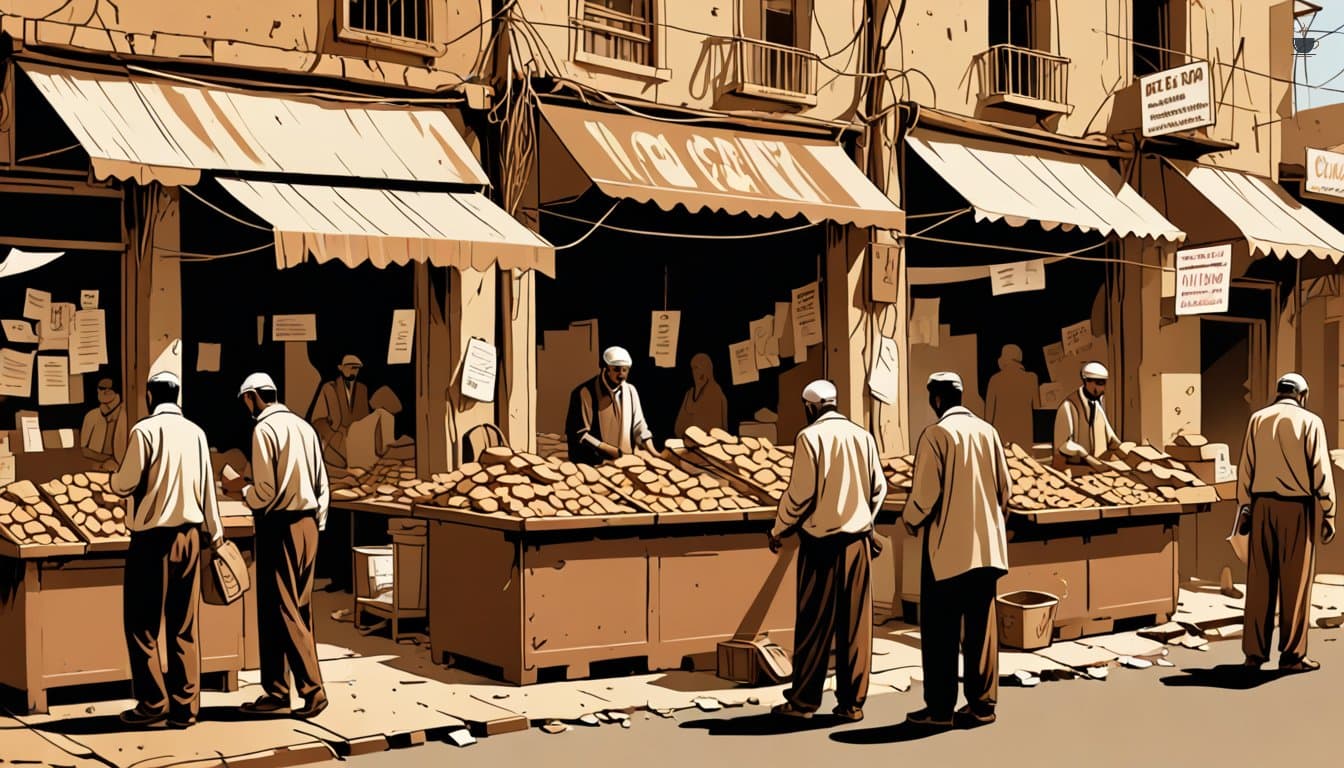
Cash Crisis Paralyzes Gaza's Economy: Residents Pay 40% Cut to Access Funds
Brokers charge steep forty percent
Economy gasps
GAZA CITY, Gaza Strip - The Gaza Strip's economy is facing unprecedented paralysis as a severe cash shortage grips the war-torn territory. With banks and ATMs largely inoperable, residents are forced to rely on unregulated cash brokers, paying exorbitant fees of up to 40% just to access their own money [1][2][3].
'The people are crying blood because of this,' said Ayman al-Dahdouh, a school director in Gaza City. 'It's suffocating us, starving us.' [1][2][3]
The cash crisis has exacerbated an already dire economic situation. Inflation is surging, unemployment rates are high, and savings are rapidly dwindling. As a result, many families have resorted to selling their possessions to afford essential goods [1][2][3].
The Palestinian economy in Gaza primarily uses the Israeli shekel for transactions. However, with Israel no longer supplying the territory with new banknotes, the situation has worsened. Merchants are increasingly rejecting tattered bills, further complicating daily commerce [2][3][4].
'It's not just about the scarcity of cash,' explained a local economist who requested anonymity. 'The quality of the available currency is also becoming an issue, adding another layer of complexity to our economic woes.'
The cash shortage has far-reaching implications beyond individual hardships. Local businesses are struggling to operate, and the overall economic activity in Gaza has slowed to a crawl. The territory's shattered economy, already burdened by years of conflict and blockade, now faces an unprecedented liquidity crisis [1][2][3][4].
Humanitarian aid has become increasingly crucial as the economic situation deteriorates. International organizations are working to provide essential supplies, but the cash shortage complicates the distribution and effectiveness of aid efforts [3].
As Gaza grapples with this financial paralysis, calls for regulatory oversight and economic intervention are growing. However, in the complex political landscape of the region, finding a swift and effective solution remains a significant challenge [1][2][3][4].
The cash crisis in Gaza serves as a stark reminder of how economic instability can compound the challenges faced by populations in conflict zones. As residents struggle to access their own money and meet basic needs, the need for a comprehensive approach to address both the immediate cash shortage and the underlying economic issues becomes increasingly urgent.