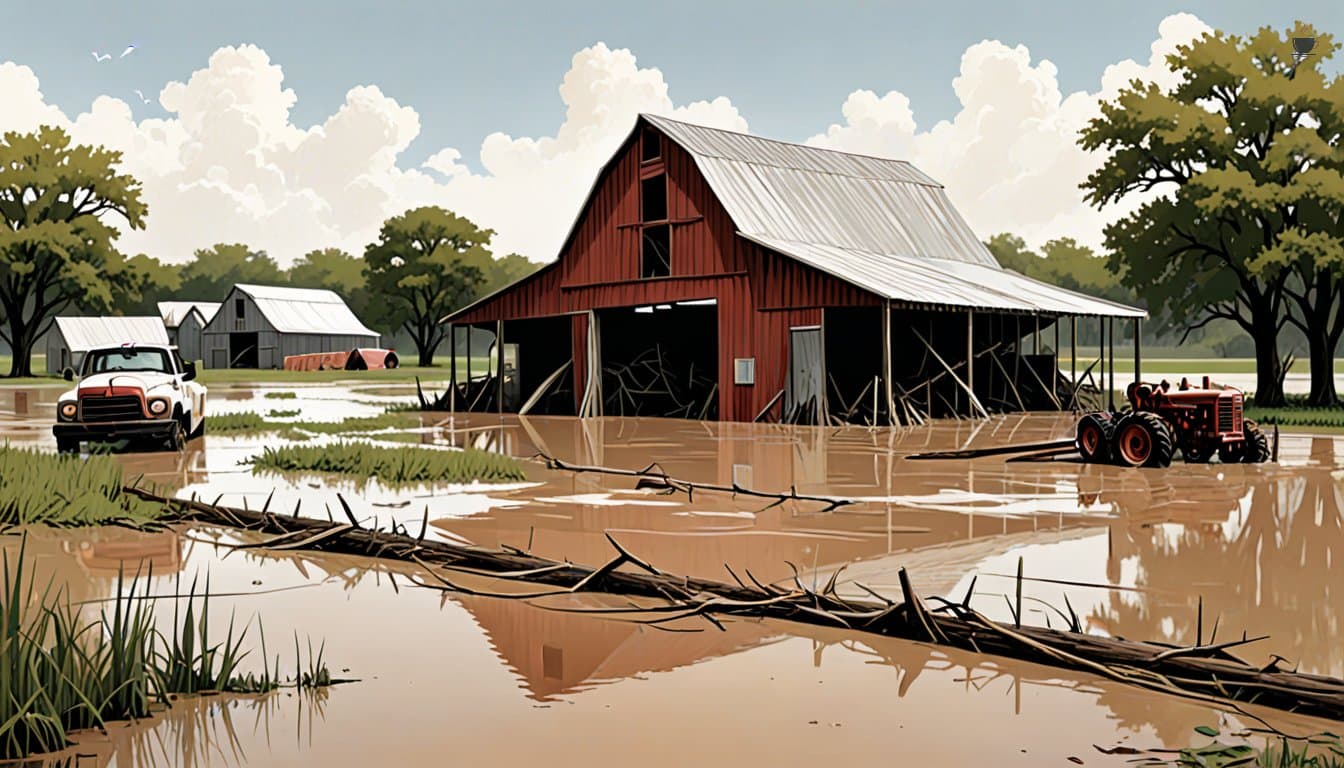
Texas Floods Devastate Farms and Ranches, Farmers Face Massive Cleanup
Farms and ranches bear the brunt
Resilience tested
BEND, Texas (AP) - Recent catastrophic floods in Texas have left a trail of destruction across farms and ranches, forcing farmers and ranchers to confront significant challenges in the aftermath. The floods have caused extensive damage to crops, livestock, and farm infrastructure, leaving many agricultural operations in disarray [1][2][3][4].
In Bend, about two hours north of Austin, farmer Boyd Clark found himself wading through rising waters to rescue a stranded ostrich hen. Meanwhile, Matthew Ketterman, owner of an exotic game ranch near Burnet, endured several harrowing hours trapped atop his truck amidst raging rapids while checking his property's fences [1][2][3][4].
The flooding's impact extends beyond individual farms. At Sweet Eats Adventure Farm in Georgetown, about 65 miles east of Ketterman's ranch, the overflowing San Gabriel River toppled Christmas trees and forced staff to relocate petting zoo animals to temporary shelters [1][2][3][4].
As of Friday, the human toll of the disaster stands at least 120 confirmed deaths, with more than 160 people still missing. Against this backdrop of tragedy, farmers and ranchers are now faced with the daunting task of assessing and repairing the damage to their properties, crops, and livestock [1][2][3][4].
"The immediate priority for many farmers is repairing fences, salvaging what crops we can, and ensuring the welfare of our livestock," said a local farmer who wished to remain anonymous. "It's a race against time, especially with the uncertainty of weather patterns we're experiencing."
The floods have highlighted the unique challenges posed by extreme weather events and climate change to the agricultural sector. Farmers and ranchers, already accustomed to the uncertainties of weather-dependent livelihoods, now face increased frequency and intensity of such disasters [1].
In response to the crisis, resources such as the State of Texas Agriculture Relief Fund have been made available to support recovery efforts. These funds aim to assist farmers and ranchers in rebuilding and recovering from the devastating impacts of the floods [4].
As cleanup efforts continue, the resilience of Texas's agricultural community is being put to the test. The long-term impacts of this disaster on food production, local economies, and the livelihoods of farmers and ranchers remain to be seen, underscoring the need for comprehensive disaster preparedness and climate adaptation strategies in the agricultural sector.