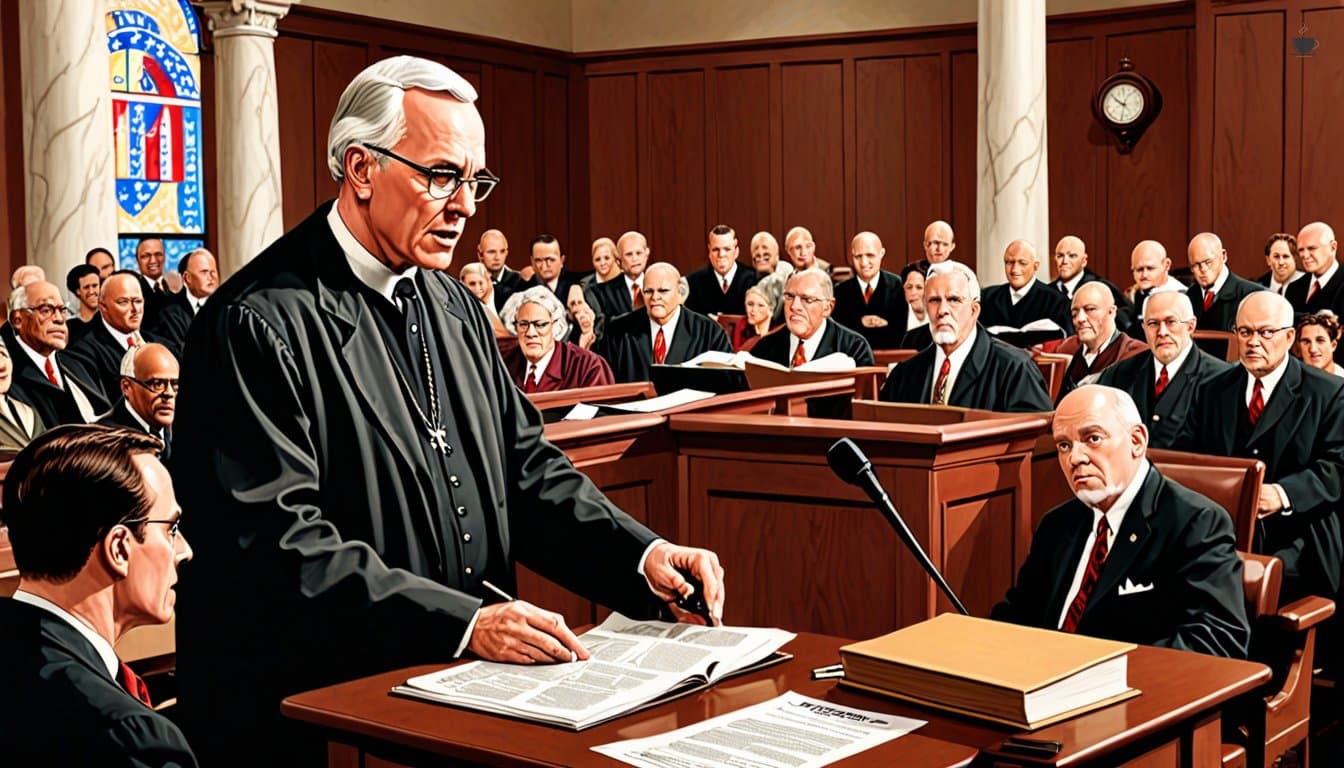
IRS Clarifies Political Endorsements by Pastors, Sparking Debate Among Faith Leaders and Experts
IRS shifts its stance now
Faith leaders divide
WASHINGTON - In a surprising move, the Internal Revenue Service (IRS) has clarified that pastors can endorse political candidates from the pulpit without jeopardizing their organization's tax-exempt status, igniting a debate among faith leaders and legal experts [1][2][3][4].
The IRS's new interpretation, revealed in court documents on Monday, states that "communications in good faith by a church to its flock does not amount to 'intervening' or affecting the outcome of a political campaign" [2][3]. This clarification effectively allows pastors to back political candidates during religious services without risking their tax-exempt status.
This decision marks a significant shift in the interpretation of the Johnson Amendment, a 1954 provision in the tax code that prohibits churches and other nonprofits from participating or intervening in political campaigns on behalf of or in opposition to any candidate for public office [1][2][3][4].
The move has drawn praise from conservatives and even some progressive religious groups. However, it has also raised concerns among other faith leaders, tax experts, and legal professionals [1][2][3][4].
The IRS's clarification follows decades of debate and recent lawsuits from conservative churches challenging the Johnson Amendment's restrictions on political speech [1][2][3][4]. While the IRS stopped short of calling for the repeal of the Johnson Amendment, its new stance significantly loosens the interpretation of what constitutes political intervention.
Supporters of the move argue that it protects religious freedom and free speech. Critics, however, worry about the potential for churches to become political battlegrounds and the implications for campaign finance regulations [1][2][3][4].
As this development unfolds, it remains to be seen how religious organizations will navigate this new landscape and how it might impact future elections and the separation of church and state in the United States.