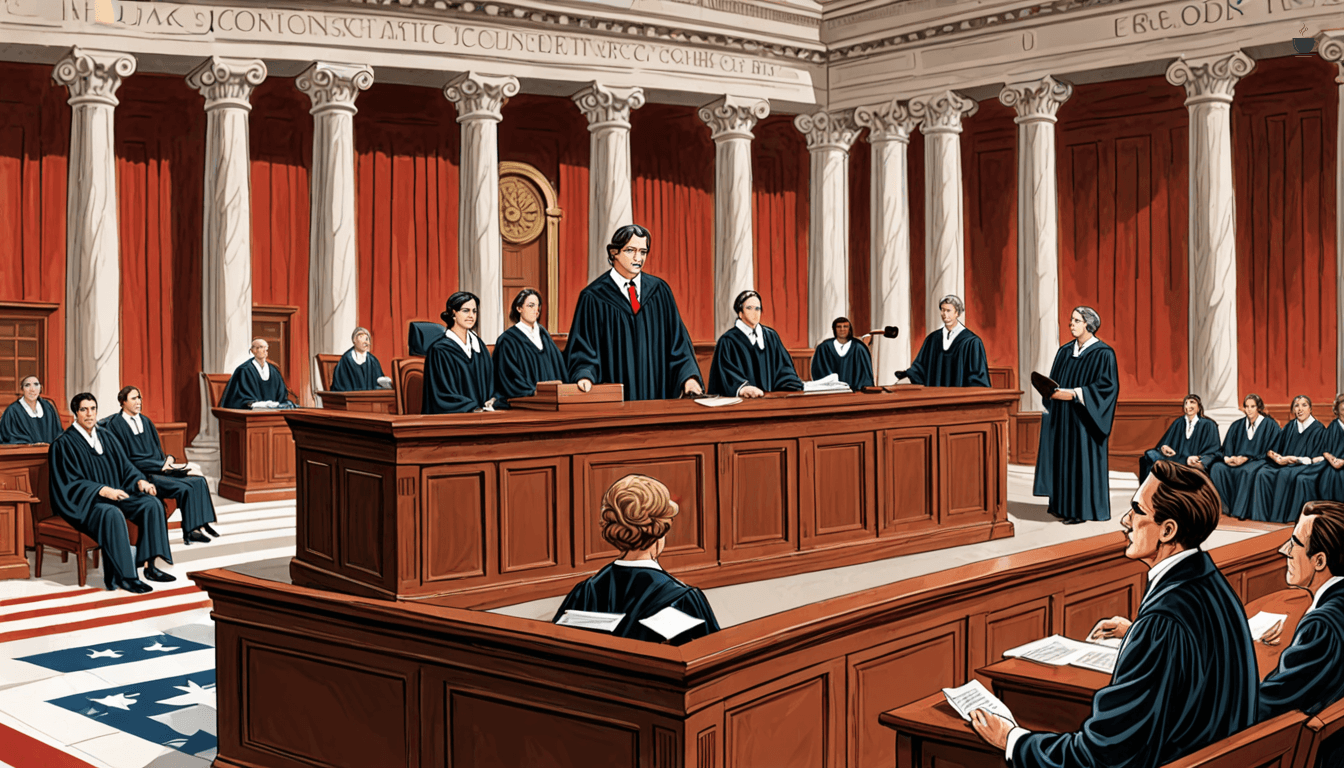
Supreme Court Allows Trump to Proceed With Mass Federal Layoffs, Justice Jackson Dissents
Federal jobs hang in balance
Jackson stands alone
WASHINGTON - In a significant ruling on July 9, 2025, the U.S. Supreme Court has cleared the way for President Donald Trump to implement mass layoffs across federal agencies, lifting a lower court's order that had blocked the controversial move [1][2][3]. The decision, which could potentially affect hundreds of thousands of government employees, allows the Trump administration to proceed with its plans to dramatically reduce the size of the federal government [5][11].
The Supreme Court's unsigned order, supported by an 8-1 majority, stated that the government is "likely to succeed on its argument that the Executive Order and Memorandum are lawful" [8]. This ruling overturns a previous injunction issued by U.S. District Court Judge Susan Illston, who had paused the planned sweeping layoffs in May on the grounds that such moves required congressional approval [2][7].
Justice Ketanji Brown Jackson stood as the lone dissenter, criticizing the decision as "hubristic and senseless" [10]. In her blistering dissent, Justice Jackson accused the court of releasing Trump's "wrecking ball" on the federal workforce [10]. However, in a notable split among the court's liberal justices, Justice Sonia Sotomayor concurred with the majority, stating that the relevant Executive Order directs agencies to plan reorganizations and reductions in force "consistent with applicable law" [1].
The ruling stems from President Trump's February 11, 2025 executive order, which called for a "critical transformation of the federal workforce" and directed federal agencies to prepare sweeping workforce reduction plans [2][7]. This initiative is part of broader efforts led by the Department of Government Efficiency (DOGE), initially headed by billionaire Elon Musk, to downsize the government [3][4].
Critics, including a coalition of labor unions and non-profit groups, argue that the administration has exceeded its authority by ordering mass firings and agency reforms without congressional approval [2]. They warn that these cuts could threaten critical government services [6][9]. However, the Supreme Court's decision allows the layoffs to proceed while lower court proceedings are ongoing [4].
The ruling is the latest in a series of Supreme Court decisions favoring the Trump administration since the President's return to the White House in January 2025 [10][13]. It potentially paves the way for significant reductions in staff at various federal departments, including Agriculture, Commerce, Health and Human Services, State, Treasury, and Veterans Affairs [6][9].
As federal agencies prepare to implement these workforce reductions, the full impact of this decision on government services and employees remains to be seen. The Supreme Court noted that while it allows the implementation of the executive order, it "express[es] no view on the legality of any Agency RIF and Reorganization Plan produced or approved pursuant to the Executive Order and Memorandum" [12], leaving the door open for potential future legal challenges to specific agency plans.