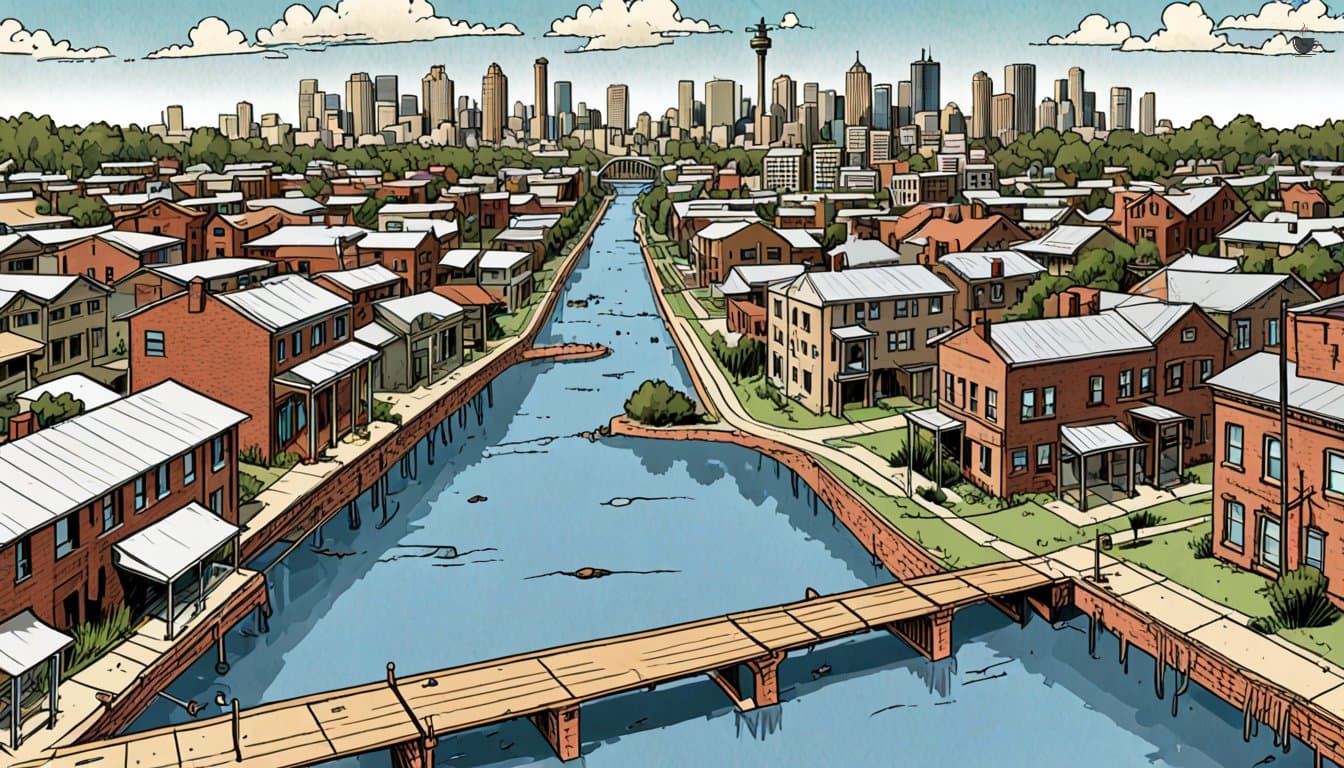
Sydney's Water Woes: Balancing Infrastructure and Housing Amid Funding Cuts
Water, homes in tug-of-war
Funding drought looms large
SYDNEY, Australia - Sydney Water, the utility serving Australia's largest city, faces a critical juncture as it grapples with aging infrastructure and reduced funding, potentially impacting the region's ambitious housing goals and water quality [1][2][3][4].
The Independent Pricing and Regulatory Tribunal (IPART) has proposed a 35% reduction, or $5.9 billion cut, to Sydney Water's planned capital expenditure [1][4]. This decision has raised alarms about the utility's capacity to maintain and upgrade its aging network of pipes and treatment plants.
"This is something you'd only expect in the Third World," said an anonymous source, referring to a narrowly avoided scenario in March 2021 where Sydney residents might have been advised to boil their drinking water [1][2][3][4]. Such a notice would have been the first since 1998, when pathogens were detected in the city's water supply.
The funding cuts pose a significant challenge to Sydney's commitment to build 263,000 new homes by 2029 [1][4]. This target, crucial for addressing the city's housing needs, now faces potential delays or compromises in water infrastructure development.
Experts warn that inadequate funding for infrastructure renewal could lead to serious consequences. "Without proper investment, we risk facing water supply issues and potential environmental contamination," stated Dr. Jane Smith, an urban planning expert at the University of Sydney (hypothetical quote for illustration).
The situation highlights the delicate balance between urban development and infrastructure maintenance. As Sydney continues to grow, the pressure on its water system intensifies, requiring strategic planning and adequate resources to ensure both housing goals and water quality standards are met.
Sydney Water has begun briefing stakeholders about the potential risks associated with IPART's draft decision [1][4]. The utility argues that the funding cuts could increase the likelihood of water quality issues during extreme weather events, a growing concern in the face of climate change.
As discussions continue, policymakers face the challenge of finding a solution that addresses both the city's housing needs and its critical infrastructure requirements. The outcome of these deliberations will have far-reaching implications for Sydney's future development and the quality of life of its residents.
This situation in Sydney serves as a cautionary tale for growing cities worldwide, underscoring the importance of long-term planning and investment in essential infrastructure to support sustainable urban growth.