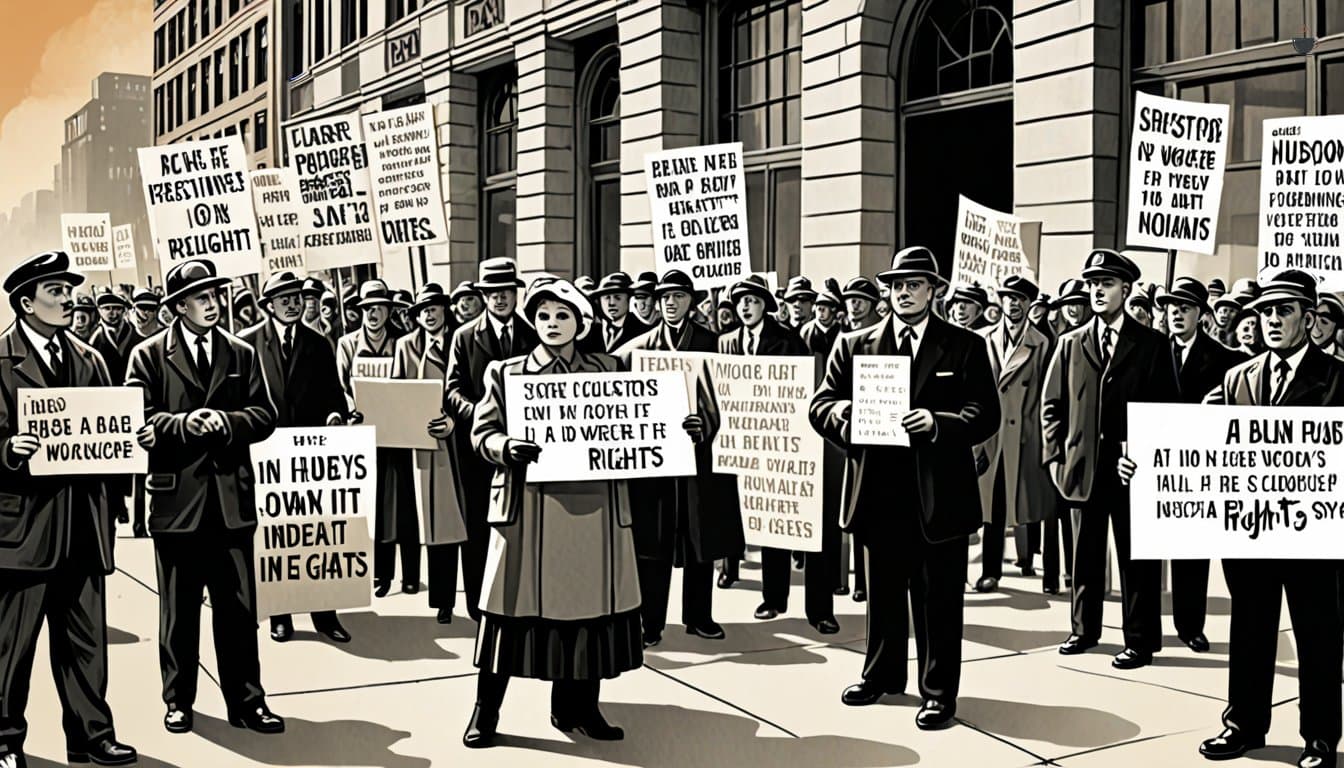
Advocating for Worker Protections Post Hudson's Bay Closure: Labour Groups Push for Legislative Change
Workers' rights take center stage
Change on horizon
In the wake of Hudson's Bay's recent closure, labour groups and lawyers across Canada are intensifying their efforts to advocate for stronger worker protections and legislative changes. The iconic retailer's shutdown, which left employees without jobs, benefits, or severance, has reignited discussions about prioritizing workers' rights in cases of company failures [1][2][3].
The closure of Hudson's Bay, a cornerstone of Canadian retail for centuries, has become a rallying point for labour advocates. In late May 2025, just days before the final store closures, employees gathered in front of two of the company's properties, not to save their jobs, but to draw attention to the broader issues at stake [1].
At the heart of the debate is the call for legislative changes that would prioritize workers' claims over those of lenders when companies face financial collapse. This push for reform reflects similar efforts that have followed other high-profile company failures in recent years [2].
Labour groups argue that the current system leaves workers vulnerable, often resulting in lost wages, benefits, and severance pay when companies go under. They are advocating for federal support mechanisms that would better protect employees in such situations [3].
The Hudson's Bay case has highlighted the urgent need for these protections. Employees found themselves suddenly without jobs, benefits, or severance pay, underscoring the precarious position of workers in the face of corporate insolvency [1][2][3].
As discussions continue, policymakers are being urged to consider the long-term implications of such corporate collapses on workers and local economies. The push for change extends beyond just Hudson's Bay, aiming to create a more robust safety net for all Canadian workers in the event of future company failures [2].
While the closure of Hudson's Bay marks the end of an era in Canadian retail, it may also serve as a catalyst for meaningful change in labour laws and worker protections. As the debate unfolds, the focus remains on finding a balance between corporate interests and workers' rights in an evolving economic landscape [3].