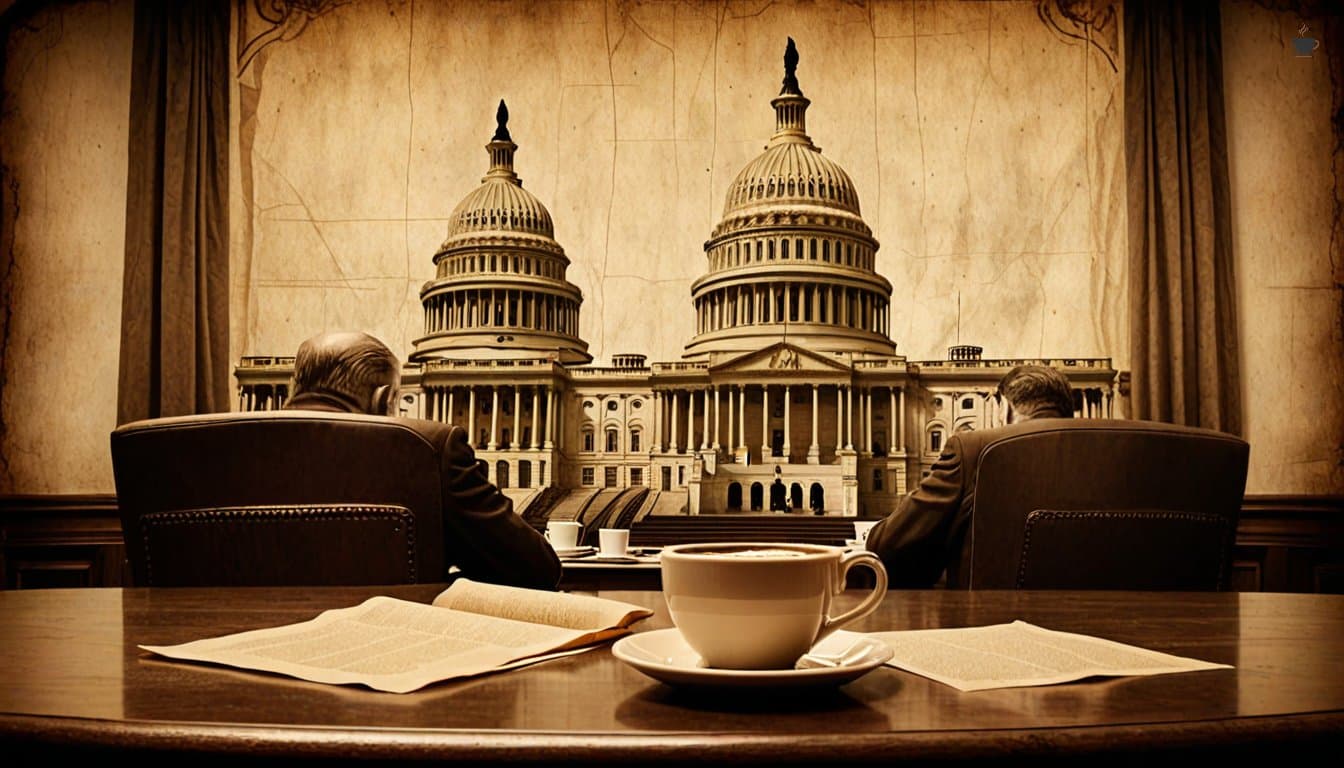
Senate Debates Trump's Big Bill Amidst Tense Overnight Session
Senators wrangle tax cuts
Deadline looms closer
WASHINGTON - The U.S. Senate engaged in a grueling overnight session stretching into Tuesday as Republican leaders sought to secure support for President Donald Trump's sweeping bill of tax breaks and spending cuts. The tense deliberations come as lawmakers race against a July 4th deadline to pass the controversial 'One Big Beautiful Bill Act' [1][2].
Senate Majority Leader John Thune (R-SD) worked through the night, attempting to bridge the gap between party members concerned about the bill's Medicaid reductions and those pushing for even deeper cuts to address ballooning deficits [1][2]. The 940-page legislation, a cornerstone of Trump's second-term agenda, includes $4.5 trillion in tax cuts and $1.2 trillion in cuts to Medicaid and food stamps [5].
"We're going to find out," Vice President JD Vance told reporters when asked about the prospects of a final vote on Tuesday [5]. Vance's presence at the Capitol underscored the potential need for a tie-breaking vote [1][2].
The bill faces significant opposition from key Republicans. Sen. Thom Tillis (R-NC) and Sen. Rand Paul (R-KY) have expressed reservations about various aspects of the legislation [5]. Meanwhile, Democrats are employing every procedural tool at their disposal to delay and oppose the bill [3][4].
"This bill's reductions to Medicaid will leave millions without care," warned Sen. Chuck Schumer (D-NY), the Minority Leader. "We cannot support legislation that prioritizes tax cuts for the wealthy over the health of our most vulnerable citizens." [6]
As the debate continues, the bill's fate remains uncertain. With Republicans holding a slim majority in the Senate, every vote is crucial. The outcome of this legislative battle could define the early days of Trump's second term, either cementing a significant policy victory or dealing a blow to his administration's agenda [5].
The House GOP is preparing for its own floor vote, adding another layer of complexity to the legislative process [5]. As the July 4th deadline approaches, all eyes remain on the Senate chamber, where the future of Trump's ambitious bill hangs in the balance.