Strait of Hormuz Tensions: India Confident in Oil Supply Despite Global Concerns
India's oil flows diverse
Global markets watch
Recent US strikes on Iran's nuclear facilities have reignited concerns over the potential closure of the Strait of Hormuz, a critical chokepoint for global oil and gas supply [1][2]. The narrow waterway, through which approximately one-fifth of the world's oil and gas flows, has become a focal point of geopolitical tension [1][2].
For India, a major oil importer, the situation appears less dire than for some other nations. Despite relying on the Strait for about 2 million barrels per day (bpd) of its total 5.5 million bpd crude oil imports, India has diversified its sources, providing a buffer against potential disruptions [1][2].
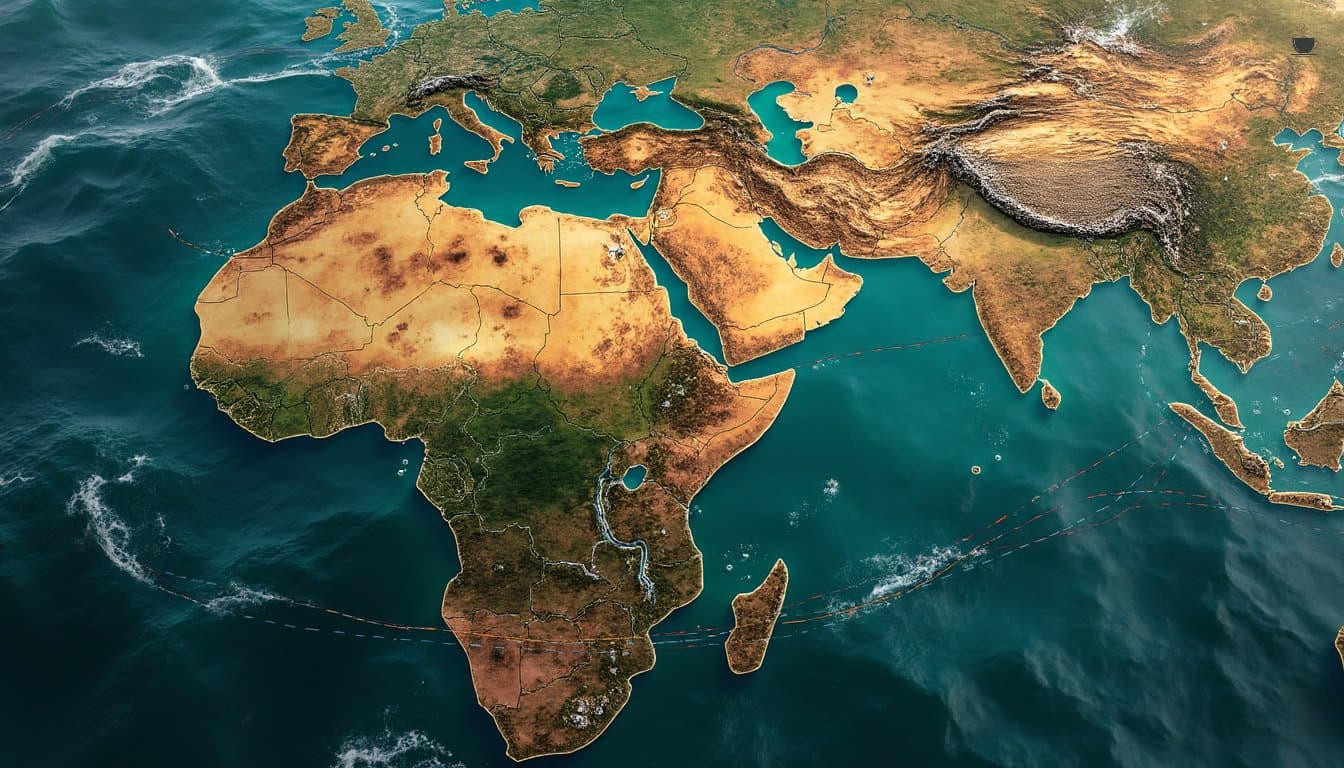
Industry officials and analysts suggest that India is well-positioned to weather a potential closure of the Strait. Alternative sources, including Russia, the United States, and Brazil, could fill any supply gaps [2]. Notably, Russian oil imports are logistically independent of the Strait of Hormuz, utilizing routes via the Suez Canal, Cape of Good Hope, or the Pacific Ocean [2].
The global implications of the current tensions are significant. Oil prices have surged by more than 10% since Israel's airstrikes against Iran on June 13, 2025 [3]. The World Bank has revised its global growth forecast for 2025 down to 2.3%, following a 2.8% growth in 2024 [3].
Europe's energy security is also at stake. Markets are pricing in risks to global oil and liquefied natural gas (LNG) supply [3]. If Iran were to block the Strait of Hormuz, through which a third of global seaborne oil and a fifth of global LNG shipments travel, oil prices could potentially exceed $100 per barrel [3].
As tensions continue to simmer, the global community watches closely. While India appears relatively secure in its energy supply, the potential for broader economic impacts remains a concern for nations worldwide.