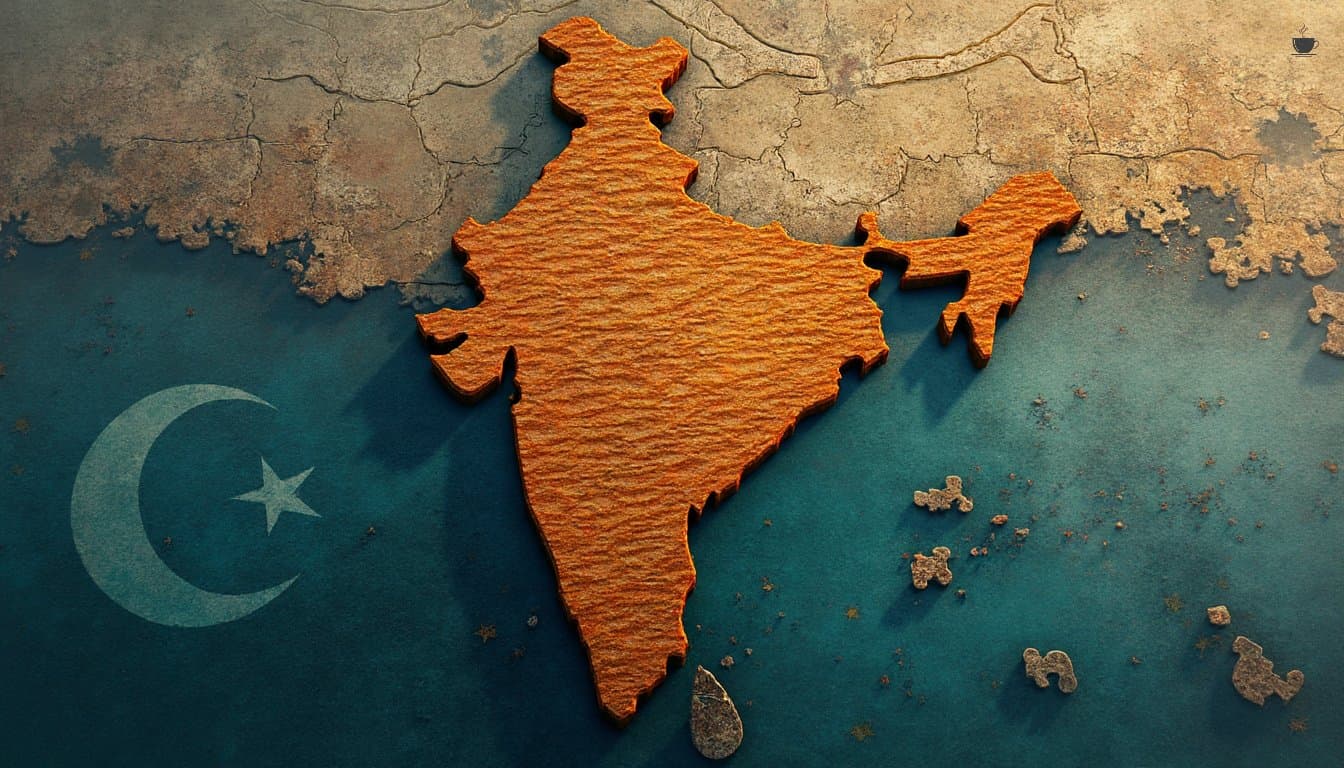
Trump Hosts Pakistan Army Chief Munir at White House, Sparks Controversy with India
Pakistan's chief and Trump dine
India disputes
WASHINGTON - In an unusual diplomatic move, US President Donald Trump hosted Pakistan's Army Chief Field Marshal Asim Munir for lunch at the White House on Wednesday, June 18, 2025. This rare meeting has reignited tensions with India over Trump's claims of mediating in a recent conflict between the two South Asian nations [1][2].
The closed-door luncheon marked the first time a US president has hosted Pakistan's military chief at the White House without senior Pakistani civilian officials present [1]. The meeting comes amid escalating tensions between Israel and Iran, with Pakistan known for its close ties to Tehran [3][4].
President Trump, speaking to reporters, stated, "I was honored to meet Munir and we discussed Iran, which Pakistan knows better than most." He added, "Two very smart people decided not to keep going with that war; that could have been a nuclear war," referring to the recent tensions between India and Pakistan [1].
Trump's comments have sparked controversy, as he once again claimed credit for stopping a potential war between India and Pakistan. "I stopped the war between India and Pakistan. I love Pakistan, and Modi is a fantastic man," Trump said [2]. However, this claim has been disputed by India, with Prime Minister Narendra Modi reportedly telling Trump on Tuesday night that no such mediation was necessary [2].
The meeting's timing is significant, coming just weeks after India and Pakistan were involved in a four-day military conflict [3][4]. Pakistani officials indicated that Munir was expected to urge Trump not to enter Israel's conflict with Iran and instead seek a ceasefire [1].
This high-level meeting between Trump and Munir is unusual, as it is rare for a US president to host a lunch for the army chief of a foreign country. Previous instances have involved Pakistani leaders who held both military and presidential roles, such as Ayub Khan, Zia ul-Haq, and Pervez Musharraf [3][4].
As tensions continue to simmer in South Asia and the Middle East, this meeting underscores the complex geopolitical dynamics at play and the United States' ongoing involvement in the region.