U.S. House Narrowly Passes Bill to Cut $1.1 Billion from Public Broadcasting Funding
Public media funds at risk
Trump's media clash
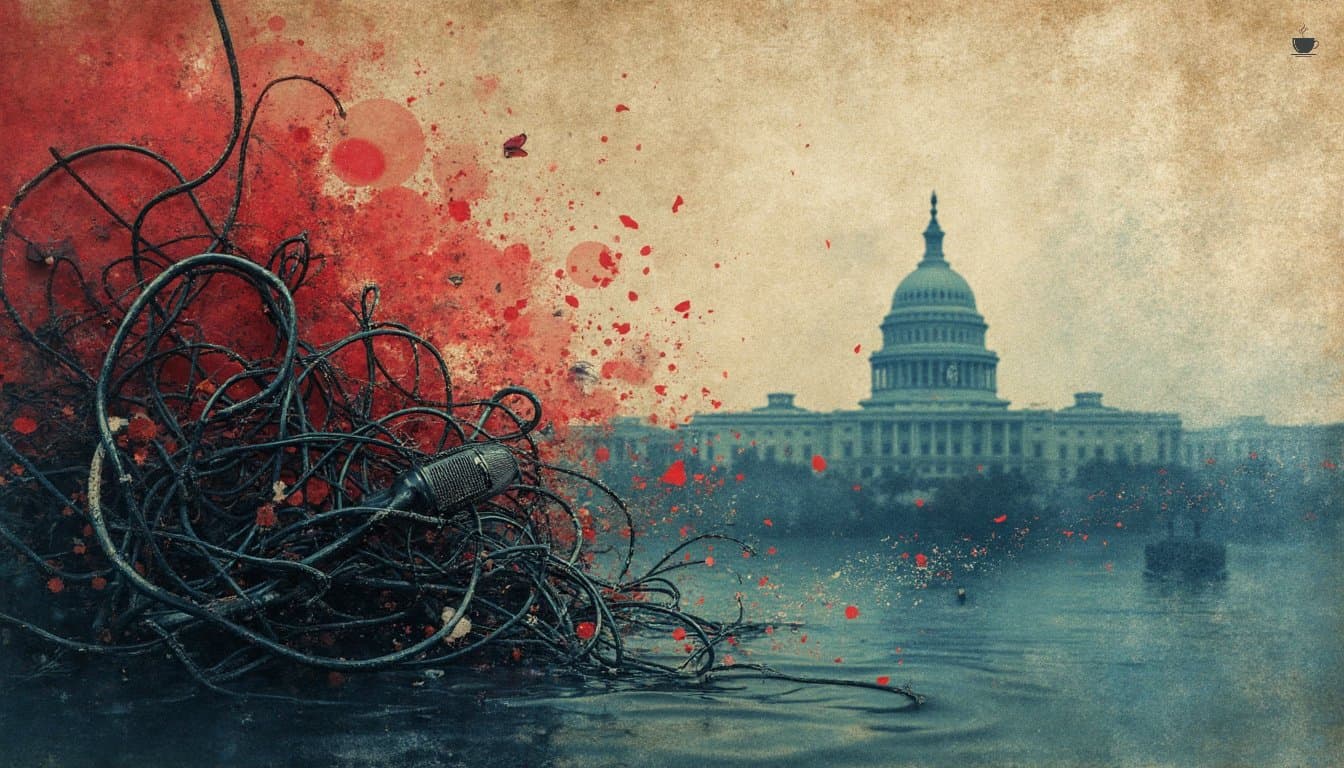
In a narrow 214-212 vote, the U.S. House of Representatives has passed a 'rescission' bill that could potentially slash $1.1 billion in funding for the Corporation for Public Broadcasting (CPB), which supports PBS and NPR [1][2]. The bill, part of President Donald Trump's larger $9.4 billion rescissions request, now moves to the Senate for consideration [2].
The vote largely followed party lines, with Republicans mostly supporting the measure to enforce Trump's agenda of cutting federal funding for public media. Four House GOP members voted against the bill [1].
President Trump celebrated the House vote on his social media platform, Truth Social, stating, 'For decades, Republicans have promised to cut NPR, but have never done it, until now,' and calling NPR and PBS a 'Radical Left Disaster' [1].
This move is part of a series of actions by the Trump administration targeting media outlets it views unfavorably [2]. The president and his companies have also filed lawsuits against media organizations, while the administration has been accused of elevating partisan right-wing voices in White House press briefings [2].
In response to the potential funding cut, NPR and PBS have already taken legal action. The public broadcasters previously sued to block Trump from an earlier attempt to prevent them from receiving public funds [2].
The bill's passage in the House comes amidst a turbulent period for media personalities. Recently, ABC News dismissed veteran correspondent Terry Moran for violating network policies with an opinionated social media post criticizing Trump and White House aide Stephen Miller [5][6]. Moran, who had been with ABC for 28 years, has since announced plans to launch a Substack channel [6][7].
As the bill moves to the Senate, the future of public broadcasting funding remains uncertain. The outcome of this legislative process could have significant implications for the American media landscape and the ongoing debate over press freedom and government funding of news organizations.