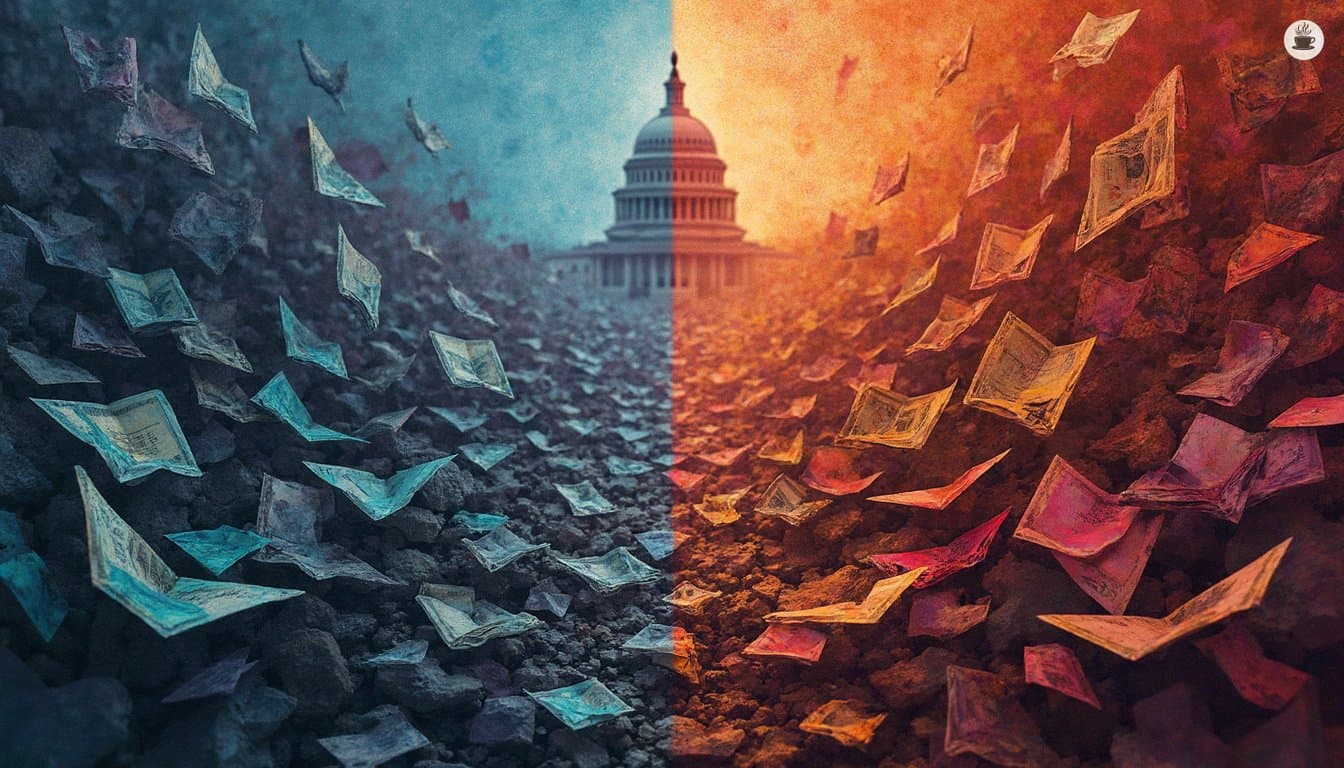
Republican 'Big, Beautiful Bill' Aims to Extend Trump-Era Tax Cuts, Roll Back Democratic Policies
Tax cuts and program changes
Parties clash again
WASHINGTON (AP) — A sweeping Republican bill, dubbed the 'big, beautiful bill,' is making waves in the U.S. Capitol as it seeks to extend Trump-era tax cuts while simultaneously rolling back key policies of the Obama and Biden administrations [1][2][3].
The expansive legislation, spanning over 1,000 pages, primarily aims to preserve an estimated $4.5 trillion in tax cuts set to expire at the end of the year. However, it goes beyond mere tax cut extensions, attempting to dismantle signature achievements of the past two Democratic presidents [1][2][3].
'We're going to do what we said we were going to do,' declared Speaker Mike Johnson following the bill's passage in the House last month [1][2][3].
Key aspects of the bill include:
Chipping away at President Barack Obama's Affordable Care Act Rolling back green energy tax breaks from President Joe Biden's Inflation Reduction Act Introducing new tax cuts, including the elimination of taxes on tips [1][2][3]The nonpartisan Congressional Budget Office (CBO) has weighed in on the potential impact of the bill. According to their analysis, 10.9 million fewer people would have health coverage under Medicaid and the Affordable Care Act marketplaces by 2033 if the bill becomes law [1][2][3].
The proposed legislation has ignited political turmoil, particularly due to its targeted spending cuts on Democratic-led programs. Critics argue that the bill represents a systematic attempt to unravel the domestic achievements of the Obama and Biden administrations [1][2][3].
As the bill moves through the legislative process, it faces significant hurdles in the Democratic-controlled Senate. The stark ideological differences between the two parties on issues such as healthcare, climate policy, and taxation are likely to fuel intense debates in the coming weeks [1][2][3].
The outcome of this legislative battle could have far-reaching consequences for millions of Americans, potentially affecting their access to healthcare, the country's approach to climate change, and the overall tax landscape [1][2][3].
As Washington grapples with this contentious bill, the nation watches closely, aware that the results could shape domestic policy for years to come.