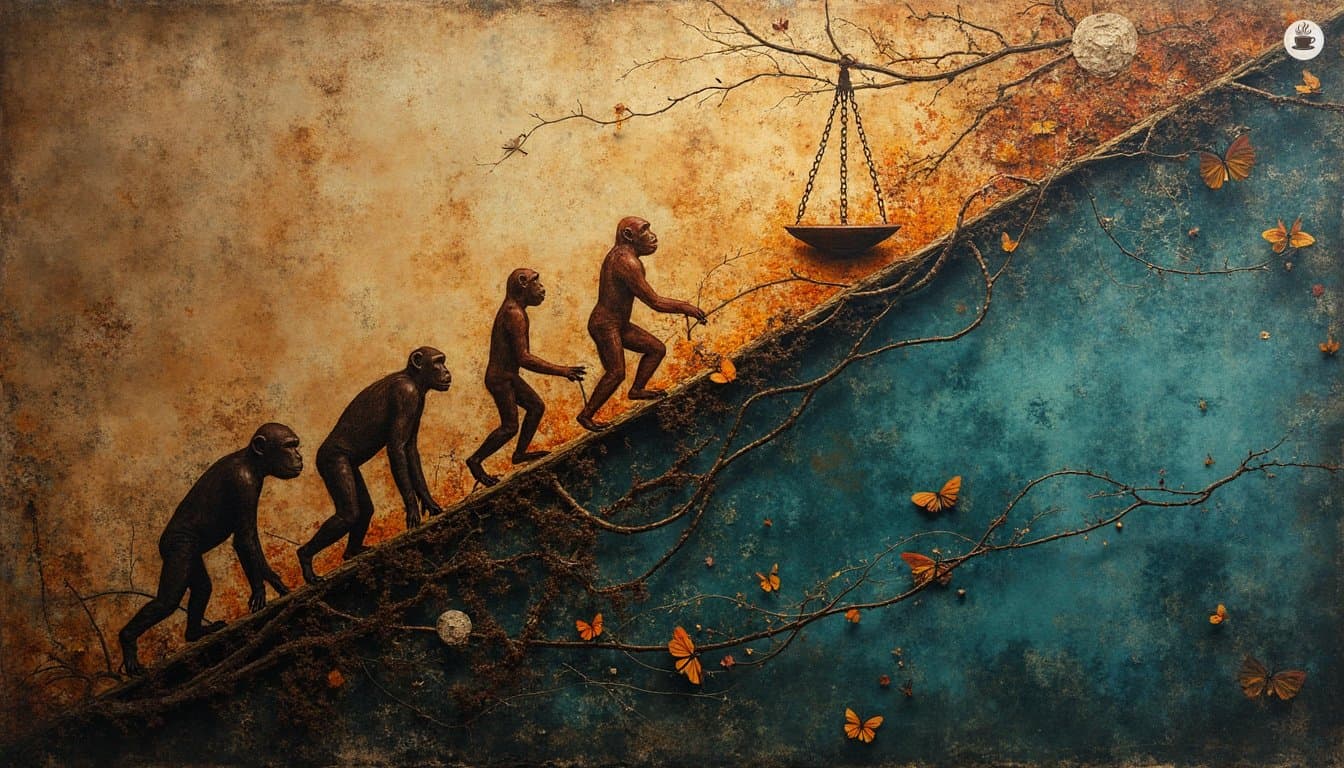
Creationist Beliefs Persist in US 100 Years After Scopes Trial, AP Report Finds
Scopes trial echoes remain
Creation debate lives
WILLIAMSTOWN, Ky. - A century after the famous Scopes 'monkey trial,' creationist beliefs continue to have a significant presence in American society, according to a recent Associated Press (AP) report [1][2][3][4]. The 1925 trial, which saw Tennessee schoolteacher John Scopes convicted for teaching human evolution, was once thought to mark a decline in biblical fundamentalism. However, the AP's findings suggest the debate is far from settled.
The Scopes trial, dubbed the 'Trial of the Century,' initially appeared to be a pyrrhic victory for creationists. William Jennings Bryan, the star prosecutor, struggled to defend literal interpretations of biblical stories when cross-examined [1][2][3][4]. Despite this, creationist beliefs have shown remarkable resilience over the past hundred years.
Recent polls indicate that between one-sixth and one-third of Americans hold beliefs consistent with young-Earth creationism, depending on how the question is framed [3][4]. This persistence of creationist views alarms many science educators, who argue that the evidence for evolution is overwhelming [2].
The strength of creationist beliefs is particularly evident in northern Kentucky, home to the Creation Museum and a large-scale replica of Noah's Ark [2][4]. These attractions serve as focal points for those who interpret the Bible's Genesis account literally.
The ongoing debate highlights a broader tension between scientific consensus and religious interpretations of origins. It also reflects the complex interplay of faith, education, and cultural values in American society a century after the Scopes trial brought these issues to national attention.
As the United States marks this centennial, the AP's report underscores that the questions raised by the Scopes trial continue to resonate in contemporary American culture and education.