Israel Controls 50% of Gaza Territory After Expanding Buffer Zone to 3km, Military Report Shows
Half of Gaza stripped away
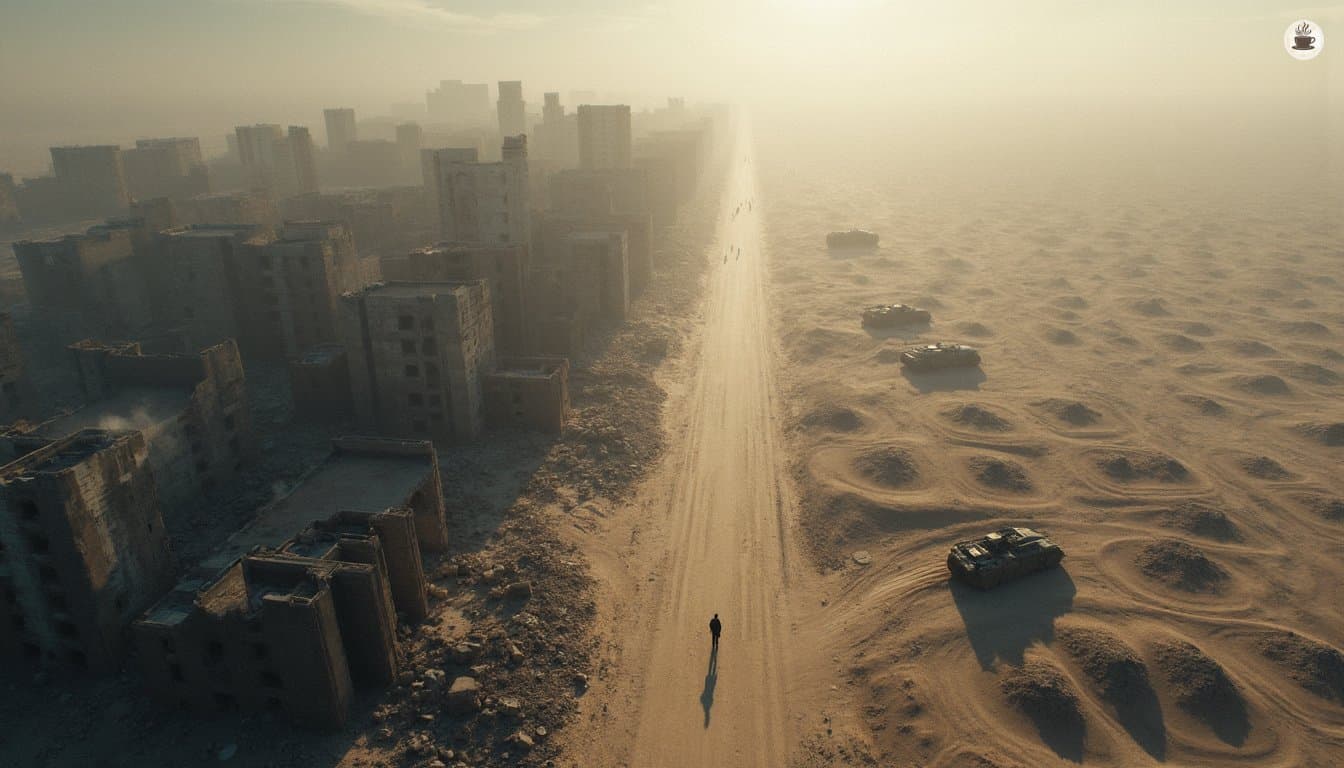
Land turned into waste
Israel has significantly expanded its control over the Gaza Strip, now holding more than 50% of the territory through an enlarged buffer zone and strategic corridors, according to multiple reports published April 7, 2025 [1][2][3].
The Israeli military has doubled the size of its buffer zone along Gaza's perimeter in recent weeks, pushing it up to 3 kilometers (1.8 miles) into Palestinian territory [1]. This expansion includes the Netzarim Corridor that divides northern and southern Gaza.
According to Professor Yaakov Garb of Ben Gurion University, who studies land use patterns in the region, the buffer zone and Netzarim Corridor now comprise at least 50% of the Gaza Strip [3]. The controlled areas include former residential neighborhoods, farmland, and industrial zones that have been systematically razed.
Five Israeli soldiers, speaking anonymously to The Associated Press, described systematic destruction within the buffer zone. A new report by Breaking the Silence, an anti-occupation veterans group, documents the military's methodical demolition of infrastructure [11].
'Through widespread, deliberate destruction, the military laid the groundwork for future Israeli control of the area,' stated the Breaking the Silence report [1].
The Israeli army maintains these actions are necessary to protect its southern communities following the October 7, 2023 Hamas attack. However, rights groups argue the displacement of Palestinians and destruction of civilian infrastructure may constitute war crimes [12].
Prime Minister Benjamin Netanyahu announced plans for an additional corridor across southern Gaza to cut off Rafah from the rest of the territory [1]. He stated that even after Hamas is defeated, Israel will maintain security control in Gaza.
The buffer zone's expansion has particularly impacted Gaza's agricultural capacity, with 35% of the territory's farmland now destroyed [12]. The area was previously home to hundreds of thousands of Palestinians and was crucial for local food production.