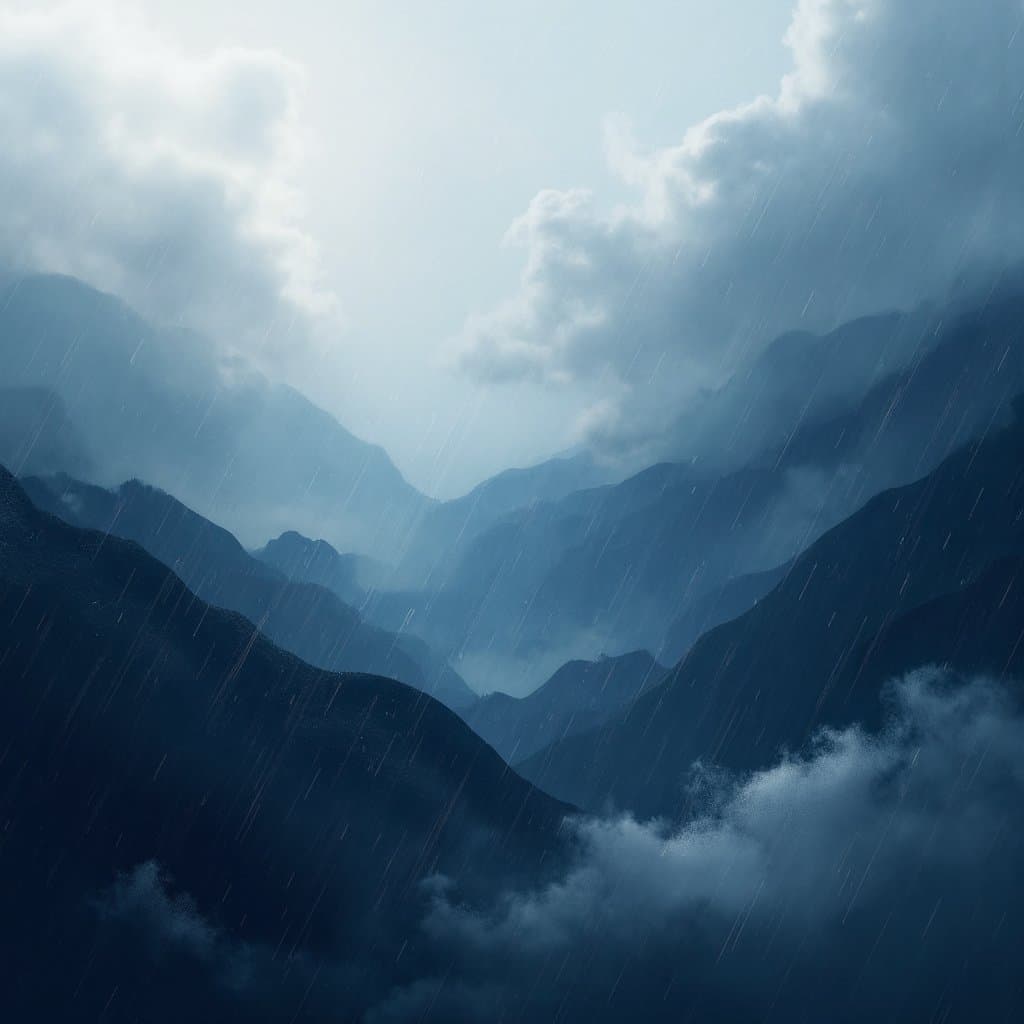
Powerful Atmospheric River Brings Heavy Rain, Snow to Western US
Rivers flow through winter skies
Nature's force unleashed
A powerful atmospheric river system is bringing significant precipitation and potential hazards across the western United States, with five states facing severe winter weather conditions through Wednesday.
The National Weather Service (NWS) has issued Winter Storm Warnings across California, Idaho, Montana, Oregon, and Washington, while an atmospheric river continues to drench northern California. The system is expected to deliver substantial rainfall to coastal areas and heavy snowfall at higher elevations.
According to the NWS, the Sierra Nevada Mountains could receive up to three feet of snow, while the Cascades and northern Rockies may see accumulations of up to two feet. In California's coastal ranges, forecasters predict 2 to 4 inches of rain, with some areas in the Sierra Nevada foothills expecting 3 to 6 inches or more.
The storm system is particularly concerning due to already saturated ground conditions from recent rainfall. Flood Watches are in effect for the Bay Area and Central Coast until Wednesday morning, with officials warning of possible flooding in rivers, creeks, and low-lying areas.
'Mountain travel is highly discouraged during this timeframe,' the NWS Sacramento office warned on social media, as snowfall accumulates on Sierra mountain passes.
The atmospheric river, described by NOAA as carrying water vapor roughly equivalent to the average flow at the Mississippi River's mouth, is part of a pattern known as a 'Pineapple Express' - moisture streaming from near Hawaii to the West Coast.
Strong winds reaching up to 70 miles per hour in some areas are expected to compound dangerous travel conditions, with reduced visibility and potential tree damage. The NWS office in Billings has warned that outdoor recreation in high-altitude areas could be 'life-threatening' due to increased avalanche risk.
After a brief respite on Wednesday, forecasters predict another system will move in from the Pacific, bringing even colder air and additional snow accumulations of up to two feet in higher elevations, likely extending travel disruptions through the weekend.